
The Beatles – « Let It Be… naked » – l’interview des personnes en charge de la production
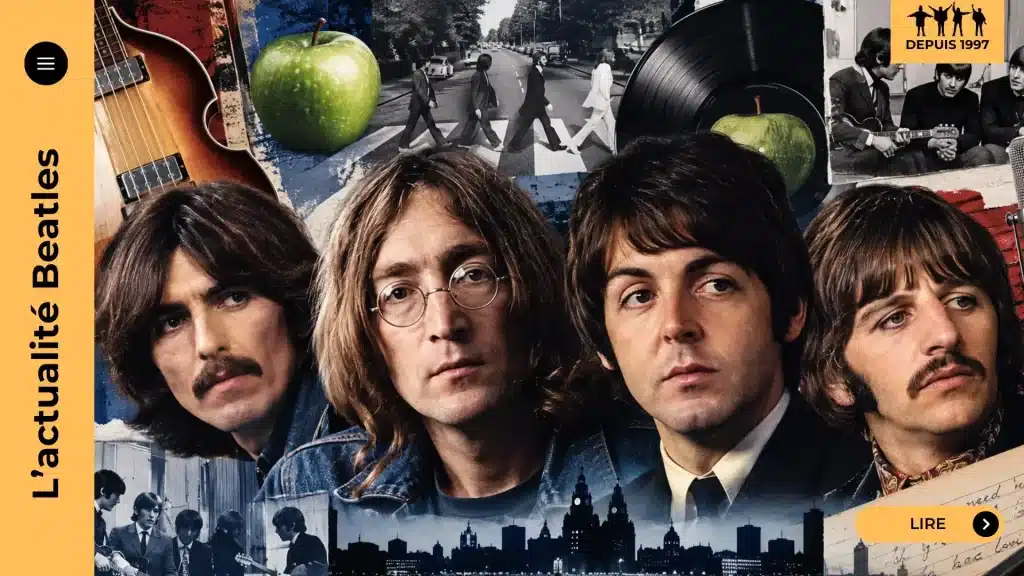
Nous vous livrons ci-après l’interview des 3 ingénieurs du son qui ont travaillé sur la nouvelle mouture de l’album « Let it Be » des Beatles : « Let It Be… aked » publié ce 17 Novembre :
Q: So when did this project begin, how did it all start?
Allan Rouse: Good question, we had a phone call from Neil Aspinall at Apple.
Q: How long ago was that?
Allan Rouse: About a year and a half.
Paul Hicks: The main mixing was done in August of last year. We were prepping it before that; actually we probably started properly the beginning of last year.
Q: And how long did the three of you work on it?
Allan Rouse: The first thing was that we knew we were making a new album. And therefore there was no reference made to the old album, because there was no point. So the first thing that Paul and Guy did was they went through all of the eight tracks and listened to every title and take and version of each title again, to make sure that we had the best.
Q: How many tracks was that?
Allan Rouse: It’s about 30 reels of tape, half an hour of tape (sic) ; so it’s a few days of listening.
Q: What was it like working on, as you say, a Let It Be that is a new version?
Paul Hicks: I thought it was exciting; as Allan pointed out it’s a very intense process, because of the historical value of absolutely everything you have to be so careful. Normally you’re trying to make improvements but you can’t stray too far away because you have to be completely stuck to a rigid set of boundaries to work to. Whereas with this, we had absolute freedom to do whatever we wanted really, just to make it sound as good and as raw as possible.
Q: For someone who has heard the original album, what’s the basic difference between that and this?
Paul Hicks: From the people who’ve heard it, one comment came that was one of our main initial aims on it – which was everyone says `I can really hear everything, there’s so much clarity’. And that was one of our goals; when we were going through the tracks and listening there were so many elements. Like there’s some amazing playing from Billy Preston, some of his electric piano work is great and so we were just aiming to hear Billy more clearly and you can hear John’s guitar and you can hear George’s guitar. We were just trying to create some space, so you can hear it all. So that compared to the version that was previously released, you could say that in a lot of ways this version is dryer. As in not so much reverb, it’s a lot tighter. That’s what we wanted to do.
Allan Rouse: Now there’s a lot of people that think that remixing is the wrong thing to do. But we’re not remixing to change it, we’re remixing it to make it sound better. What’s happened here is that the difference between this and any other previous projects is that, whilst remixing it, we’re still trying to make everybody think they’re still listening to the same thing but they’re just hearing it better. But we treated this as a new project. And there were no guidelines.
Paul Hicks: One of the things when you listen to the original Let It Be there is that element of the fly on the wall thing, because you hear the tape starting up, you hear the comments. But our thought was that compared to all the other albums it was a bit like an extension of the film – but with this we wanted to make a really good album. As in these are the songs; we’re not going to have clapping at the end or whatever. It was just let’s just make this a really strong Beatles album to go with the others.
Guy Massey: It was making something that people would want to listen to.
Allan Rouse: That’s just it. All three of us are Beatles fans, which is quite useful, and this is what we wanted. It’s like anybody who produces anything, it’s what the producer and the artist want. So as the artists have already done their work, now we’re going to do our little bit towards it and it’s what, as fans, we would rather listen to.
Allan Rouse: There’s no dialogue because people can get bored with hearing it; a song you can hear again and again and again and again – and like it. And if the DVD comes out you’ll get your dialogue on that.
Q: So you don’t have `Doris gets her oats’?
Allan Rouse: No, none of that. There’s no dialogue.
Q: So what did you essentially do with this album?
Paul Hicks: Really the thing is that most of the tracks are the same takes as what people have known before; the absolute obvious change is The Long And Winding Road – it was a very different version that Phil Spector over-dubbed on and when going through it all we discovered that the version that’s on the film, the one that they did on the last day, that we felt had a really good sort of sentiment and the emotion was just fantastic. Just the playing of the drums and Paul’s vocal on that are great and it really suits it. That’s the stand-out different one.
Paul Hicks: And because of the nature of when it was recorded, there are certain things on the tracks where if they’re not playing, they’re making noises and stuff. So one of the first things we did was to go through it all track by track and just clean it up; clean up the little pops or when they’re moving around between the takes you can hear on the original. We basically made every track completely clear.
Allan Rouse: In my view there’s two things about an album, there’s two experiences you get; you get the experience of the music and the songs, which you love, and you get the audio experience. And this is the one thing, the major alteration, that’s changed, the audio experience – to make it sound good anyway but also to extend its life because we all listen to things totally different from how we did 30 years ago. If you take the early Beatles recordings, a lot of people think it’s a great novelty to have a vocal coming out of the left speaker and the drums coming out of the right. But kids today don’t understand it. It’s `why?’ So all of these aspects of remixing the album which we’ve used for other projects, the whole purpose behind it in this instance was besides the fact that it’s a completely unique album, was to make all these improvements that Paul and Guy can do to make it sound like a much more exciting audio experience.
Q: Are all the tracks live, as in the take you hear is a complete take?
Paul Hicks: When we sifted through the tracks we basically took anything that was an overdub. It’s what they were playing. I Me Mine is an exception because…
Guy Massey: I think there was only two of them playing on the original take, I think it was just drums and guitar..
Paul Hicks: Another example is Let It Be; we used the original guitar solo that George did because he overdubbed the solo.
Q: That’s a fantastic solo, the original; just the necessary notes.
Guy Massey: Yeah, there’s no floweryness.
Paul Hicks: It’s the same one that’s in the film and he just looks like he’s enjoying it.
Paul Hicks: I was explaining to someone exactly what we’ve done and I was saying that this now is a different version of The Long And Winding Road, and this person said `Well, why?’ And then I thought `Yeah, actually, why?’ But the basic thing is what Phil Spector did was he covered up on the actual version they used on the original album. If you strip it out you can see that he covered up on what was quite an early rehearsal take, the one they used, and there were many things that weren’t fantastic and it wasn’t that strong as a piece on its own. But that’s the reason why we changed The Long And Winding Road, because this is a much stronger basic performance. That’s what we were going for; we didn’t want to do any editing, but we were basically going for the strongest performances.
Q: So of the eleven tracks, how many are different takes from what Phil Spector used?
Paul Hicks: As a basic take, just Long And Winding….Actually, let’s go through the tracks. Get Back, that’s basically as it’s been heard before. But it’s a studio take and what they did on the original album was they added the audience and an ending to make it sound live. But Get Back’s essentially always been a studio performance. And, again to just keep the album feel of it and because it is what was on the original, we haven’t got the ending, the reprise, that you’d heard before. Now it’s compact. It’s two and a half minutes and just punchy and sounding exciting. And that was done by remixing and just cleaning it up, removing noise and hiss and the limitations of the speakers in those days. In cleaning up the tracks it meant cleaning up wind noise and some hum and also you have to remember that there were film crews around, they didn’t know if that would be the take so there were people making noises. In stripping it back we have had to do a few little edits, to avoid actually changing things.
Paul Hicks: So I’ve Got A Feeling is a mixture of the two rooftop performances; it’s a completely new edit.. We basically got the best out of both of the two takes that they did. That’ll be a field day for people to try and work out what it is.
Q: But as you were saying, it’s the album they could have made if they’d have made it now, with the technology of now.
Paul Hicks: Yes. Totally. It is embracing today’s technology. Dig A Pony…that’s from the rooftop, as was the original.
Guy Massey: Basically we just cleaned it up; there was lots of popping on the vocals. Phil Spector did some edits that we re-did, they made sense.
Allan Rouse: Apart from the four Phil Spector tracks in which the changes are obvious, if you know your Beatles well enough you’ll know there’s something missing. But if you listen to the other original tracks which have got nothing extra on them apart from maybe a bit of Phil Spector echo, the difference for a lot of listeners is subtle and it’s not the sort of thing that they would immediately recognize until they dug out their old version and heard the difference.
Q: The Beatles 1 album introduced The Beatles to this new demographic of teenagers that marketing people call `The 1 Generation’. If they were weaned on 1, do you think that the new Let It Be is a good introduction to the Beatles as a good rocking band?
Allan Rouse: I think it is now, yes. I think the concept of doing it this way has made it so.
Q: The new album certainly explains, now, Paul McCartney’s point about The Beatles being best at being a good little rock and roll band.
Paul Hicks: It certainly does, yeah.
Allan Rouse: I go back to what I said before; I know there are people who are opposed to remixing but this project couldn’t have been done without remixing, because the whole purpose was to remove things – so it had to be remixed. The argument exists as to whether anything else should be remixed but so far we’ve done tracks on Yellow Submarine and some hundred and twenty tracks on Anthology. And the simple fact is, perhaps a little bit more so on this album than anything before, we’ve tried to make it sound more `now’. We’re not trying to do away with 1969-70 but we’ve tried to make it sound a bit 2003.
Paul Hicks: With the 1 Generation, we want them to put on this album and then put on their other new stuff and there not to be too much of a difference in the sound; that was one thing we’ve always been thinking about with this project.
Allan Rouse: Once they invented the CD everybody put their CDs out straight from the flat tape, everybody did it because that’s all they thought was necessary because they thought CD reproduces everything so well, there’s no tape noises, no problem, and so we’ll just do that. And then people sussed out that they could remaster them. Now remastering is fine and in a lot of cases it’s adequate and good enough. And remastering is purely to enable the reduction of tape noise and to improve the sound and to make it more of an enjoyable audio experience. Remixing is just one more stage, a more expensive stage, up on that. Because that’s all we are attempting to achieve. Somebody could go to a remastering room and say they could do with a little bit more vocal, so you add some EQ to pull the vocal out. But you don’t just pull the vocal out; anything either side of the vocal in terms of the EQ will be affected by it. OK, if you want more snare drum so you add EQ to that – it’s going to affect other things. But if you do it in a remix, you want more snare drum, you have more snare drum. And that’s all there is to it – it’s the definitive way of remastering. And, fortunately in the instance of this album, we had no choice and we had to remix it. So it’s remastering by remixing.
Q: Which brings us back to `is this a new album?’
Allan Rouse: It is a new version of the album. It had to feel the same but it had to sound better. We were given very little information as to what was expected with this album, but I think we all knew what was wanted. And it could only really be achieved by taking a blank canvas and starting again. That’s basically the way it was. And that’s why, at no point, did we really reference to Glynn Johns’ mix or Phil Spector’s, because there was no need to. That wasn’t the purpose.
Paul Hicks: Back to the tracks….For You Blue; that’s just a matter of getting more clarity, really. It was a really good recording on that one, actually; really clear and crisp and we took advantage of that and, like Get Back, just tried to make it as punchy as possible.
Paul Hicks: There’s really not much that can be said about that track; it’s hopefully a bit clearer. We noticed that Paul’s doing like a weird piano sound that he got by putting paper in it. You know that weird little percussive sound in it, that’s basically Paul playing the piano that’s been muted, so it’s got that percussive sound. Again, all we’ve tried to do is to get it so that you can hear all those elements …. The Long And Winding Road, we’ve spoken about that; that’s the version from the 31st of January, the last day of recording.
Allan Rouse: Talking about The Long And Winding Road, one of the biggest problems we had was that the lyrics changed….It was only a small, subtle change.
Paul Hicks: Not `you’ll never know’ but `you’ll always know’…
Allan Rouse: Once we realized that the lyric had changed we then had this quandary as to whether or not this was acceptable now, because this was something really, really obvious. It’s one thing having a different take, but you expect the lyrics to be the same because otherwise God knows what people might assume. The conclusion we came to in this instance was that, because it was the very last take that he probably ever did, therefore it was probably more correct. So that’s how we resolved our problem, we figured that Paul had tuned his lyrics and that was probably what he really wanted. But then Phil or Glyn use the take that was done beforehand and, of course, that’s how those lyrics became set.
Q: It’s interesting that Paul still sings the Phil Spector version of his lyrics onstage.
Guy Massey: He did comment on that when he heard this album.
Allan Rouse: Didn’t he turn around and look at us at that stage?
Paul Hicks: Oh yeah, he did. He noticed.
Allan Rouse: Well he was obviously singing along and it went wrong…But he was happy with that.
Paul Hicks: But then, again, that’s the version that’s in the film.
Q: But so few people these days have seen or can remember exactly the film.
Allan Rouse: Very few people have seen it for a long time.
Q: Exactly, so for a lot of people who will be interested in buying this album it’s a case of `what film? `When’s that out?’
Allan Rouse: This reminds me that both Paul and Guy have used some artistic license in that, and The Long And Winding Road is a good example of this, the instrumentation which starts all at the beginning doesn’t necessarily start at the beginning in our version. In other words we’ve done little subtle things to build a song. Guy did the same thing in Across The Universe.
Paul Hicks: Arrangements…
Allan Rouse: We’ve arranged it, a little. So in other words if we felt it needed a build we wouldn’t necessarily have everything in from the beginning. Across The Universe is probably the best example. Guy did Across The Universe and he had a bit of a problem there, because he had two tracks. And that was all. On track one was guitar and vocal, John singing, and the only other thing that was played live was tambora. And that was it. Yoko’s heard it and thinks it’s beautiful, so that’s fine, but the point was that all that was running from beginning to end was John playing guitar, singing, and tambora. And that was it, all the way through.
Guy Massey: There was tom-tom as well.
Allan Rouse: But Guy has done various things to the tambora and changed the overall sound of the tambora throughout the structure of the song, to build it, to change the concept of it – because otherwise you’re missing so much from that song with just those two things going on. There were loads of overdubs on top of that. Not all of the songs were treated in that way, but some leant themselves to a build. Let It Be was another example of when that was done.
Allan Rouse: We actually spent a long time, the three of us, to get the right running order. It’s completely different and I think it makes you want to listen to the album more. For instance, One After 909 now starts within split seconds of the track before it. If you think about Beatles albums or any album recorded in the Sixties with the exception of albums like Abbey Road, there was always three seconds between each track. It didn’t matter how it felt, you just measured three seconds of white leader and stuck it in. But we didn’t do that because people don’t do that anymore, people use feel for when the next track should come in. All of this is slightly different to the usual Beatles album.
Paul Hicks: I personally think that these changes are good if only to show people that this is a different product. It’s instant, you can see and hear instantly that it’s something different.
Allan Rouse: You can probably see why we are rather excited by this album. It’s a privilege to be given a free hand and it is incredibly satisfying to think that in all probability this is the only time that it’s going to happen, you can’t do it with any of the other albums. It’s a privilege to be able to do it.
Q: And the rest of the tracks….?
Paul Hicks: Two Of Us, we’ve used the same take and not a lot of editing done on that, just a straightforward remix. I’ve Got A Feeling is an interesting track; I’ve Got A Feeling is the rooftop performance – the rooftop tracks, by the way, are I’ve Got A Feeling, Dig A Pony, The One After 909 and Don’t Let Me Down. I’ve Got A Feeling is actually quite different than has been heard before; that’s the one on which we did a lot of work to get the most exciting bits out of the two takes that were on the rooftop.
Paul Hicks:It was just block multi-track edits, just `that verse is better than that one’. On one of the takes the guitar was really distorted and very exciting, I love the excitement of I’ve Got A Feeling; with Paul just screaming away on it it’s a really good moment on the album. Next, One After 909 – again, taken from the rooftop which was also used on the original album but now one of the main improvements is the drum clarity. No edits there, it’s pretty naked. Next, Don’t Let Me Down – also from the rooftop.
Guy Massey: John fluffed his lyrics on one take….
Paul Hicks: But the other take had the correct lyrics.
Allan Rouse: One of the things that is very comforting for us in all of this, by the way, is that Ringo appeared to be really knocked out after he first heard the new album, he became very vocal about it. And then we heard that Paul was really knocked out too, so that made it all matter.
Paul Hicks: I Me Mine – again basically just the take from the original.
Allan Rouse: I think it’s important to recognize that it is the take with overdubs because some people might start saying `I thought this was meant to be without overdubs, but it’s got loads of overdubs on it’. But you have to understand that we couldn’t pare down what was there; it didn’t have a vocal anyway, the backing track if you like.
Paul Hicks: It would have just been drums and a guitar for I Me Mine.
Allan Rouse: And that obviously doesn’t work.
Paul Hicks: Because even the vocal was really a guide vocal and he overdubbed that on I Me Mine.
Allan Rouse: So it is important to realize that there was reason behind what we did and the reason was that in attempting to achieve what we’d done with everything else the only choice we had was to have left some of the overdubs there. Otherwise it would have sounded bare and it wouldn’t have worked. What track’s next? Across The Universe, what did you do with that, Guy?
Guy Massey: Well, there wasn’t a lot that we could do with it, really. We stereoized the tambora as it was building, we had it in mono first and then for the first chorus we opened it out so it was stereo. We did the same with the vocals, widened it out a little. And then Alan suggested why doesn’t it all fade into beautiful reverb at the end; so we all laughed, did it, and it sounded great. Originally we thought that was going to be the end track on the album, just a lovely thing to go out on, just disappear on it. But then when we did the running order it didn’t flow quite as well, so we put Let It Be last, which seemed to fit as well.
Allan Rouse: I was just thinking about the irony of that, we spend a year and a half getting rid of the sound of Phil Spector and then we go and put a tape delay and then a reverb right on the end of it. It’s just a little present to Phil Spector, so he doesn’t feel completely left out.
Q: Was Across The Universe recorded at the Let It Be sessions?
Allan Rouse: No. They did it numerous times. You would assume they were intending to put it on the album because it was rehearsed quite a few times within the (Let It Be) sessions, but the version that ended up on the album was recorded a year before. We were very worried that because this wasn’t recorded during the actual Let It Be sessions then maybe the track wouldn’t go on the album. But the way I saw it was that Across The Universe needed to be there in order to go with Paul’s Long And Winding Road. And, as I said, they rehearsed it numerous times during those three weeks.
Q: What did you do with Let It Be?
Guy Massey: Again, we just wanted it to build, so we started it as it does start, pretty quietly and then we just introduced bits and arranged it a bit more than it had been previously.
Allan Rouse: We made a bigger thing of the other Beatles in the « oo » section. It works, it’s nice, it’s much more ethereal as these lovely voices come out. They were always there but we just made it a little bit more.
Q: George’s guitar solo on Let It Be is different from what has been heard before?
Guy Massey: We loved that and we wanted to get that in. It’s only been heard before in the Let It Be film.
Q: But anyone who saw the film back in 1970 would not have heard it in such quality as this, in their local Odeon.
Allan Rouse: And in mono then.
Q: Now they sound like the songs you imagined they wanted them to be when they first did them.
Allan Rouse: Hope so.
Q: As with any Beatles project there is a contradiction of expectation in this one; over recent years there has been a move – probably started with The Beatles Anthology series – to cram as many minutes of music onto a CD as a disc can take, up to the last second. They did that with The Beatles 1.
Allan Rouse: The album length has hardly changed, despite the fact that we took Dig It and Maggie Mae out and all the dialogue, because Don’t Let Me Down wasn’t on the original album and that has made up the difference. This is the same length as The Beatles first four albums, practically. We were worried about that. When CD first came out and people realized they could put 80 minutes of music on a disc, I think some thought they had to put on 80 minutes, or at least 75.
Q: That’s a point that Neil Aspinall made with this album; he said « it’s a very listenable album ».
Allan Rouse: I think it is, actually. I enjoy listening to it.
Q: But it’s not just that the content is listenable, it’s that the whole, as a 35-minute album, is listenable. People can find 35 minutes in a day to hear music, whereas they can’t always find 80 minutes to spare.
Paul Hicks: I just think that if any artist records 17 songs and eight of them are good, why not just release the eight good ones? As a record buyer, I wouldn’t feel cheated if I got eight or 10 really good songs on an album, as opposed to getting 17 and half of them aren’t so great.
Q: So, was this a good project to work on?
Paul Hicks: It was very satisfying.
Guy Massey: It was an honour. To do something like this with a free rein, but treating it with respect, was great.
Allan Rouse: There’s always that worrying moment when you send a CD out and, in this case, you know that two, sadly only two now, of the biggest musicians in the world are going to listen to something you’ve done and you want to know what their reaction will be. The least you expect `Well, yeah, it’s good, but I wonder if perhaps you could just do a bit more vocal on this’ or `maybe the bass wasn’t quite as good on this as it was on that’. But the fact that we’ve actually not changed anything since the first pressing of the first CD was sent out to them, we hoped that we were satisfying them and it appears that we have. And that is a huge kick.